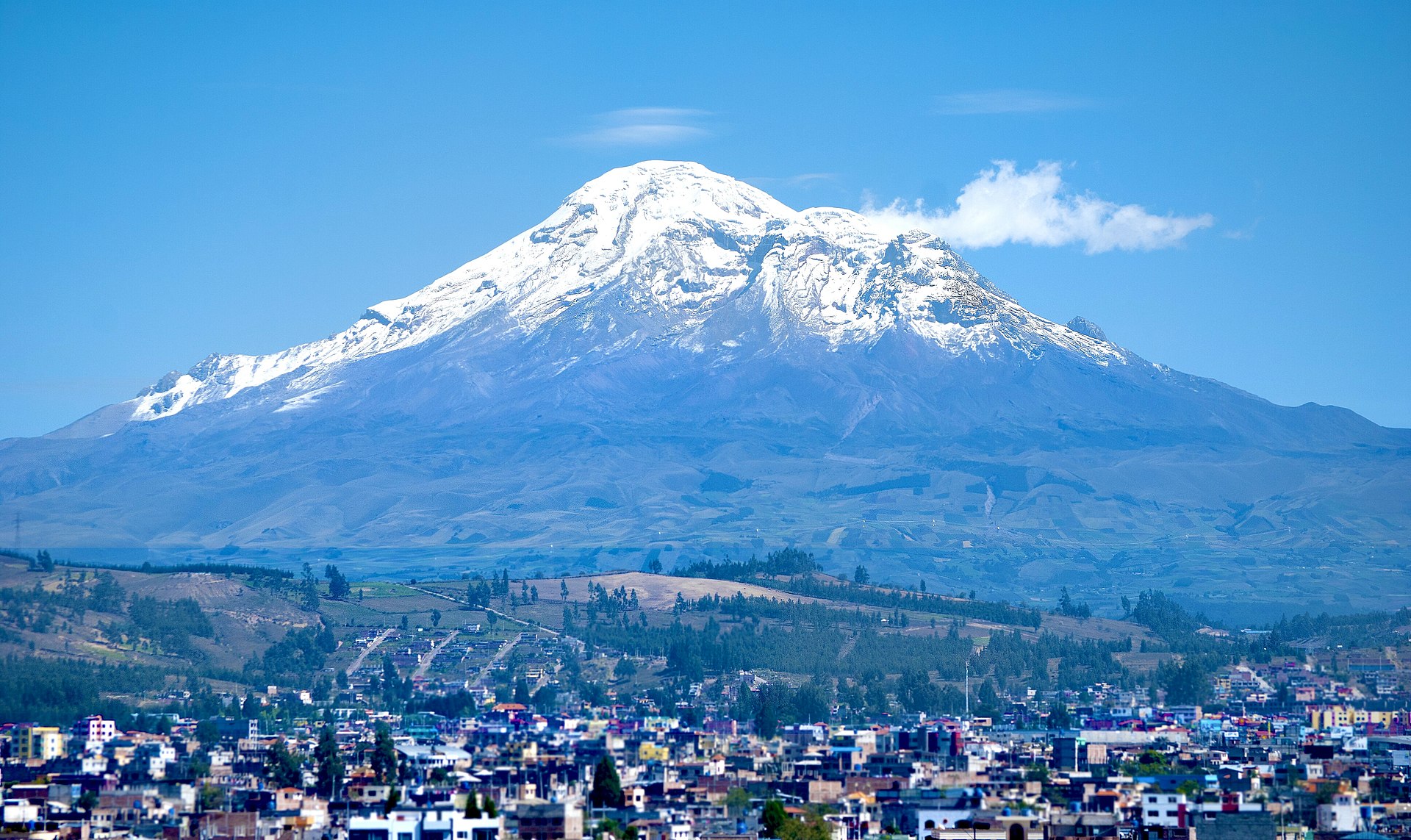
Chimborazo: The Farthest Point from Earth’s Center

nordic-circus.org – Chimborazo, an iconic stratovolcano in the Cordillera Occidental of the Andes Mountains in Ecuador, is not only a breathtaking natural wonder but also holds a unique distinction: it is the farthest point from Earth’s center. While Mount Everest may be the highest peak above sea level, Chimborazo’s location along the Earth’s equatorial bulge places its summit further from the planet’s core.   

A Dormant Giant

Though Chimborazo is an inactive volcano, its imposing presence dominates the landscape. Its snow-capped peak, reaching a height of 6,263 meters (20,548 feet), is a constant reminder of the raw power of nature. The volcano’s four distinct summits offer challenging climbs for experienced mountaineers, who are drawn to the thrill of conquering this majestic peak.   

A Tapestry of Ecosystems

The slopes of Chimborazo support a diverse range of ecosystems, from páramo grasslands to glacial ice fields. As you ascend the mountain, you’ll encounter a fascinating array of flora and fauna, including rare and endemic species. The páramo, a high-altitude ecosystem characterized by unique vegetation, is particularly breathtaking, with its vibrant wildflowers and dramatic landscapes.

A Cultural and Historical Landmark

Chimborazo has been revered by indigenous cultures for centuries. The Inca people considered the mountain sacred, and its slopes were once home to ancient settlements. Today, the region around Chimborazo is inhabited by indigenous communities, such as the Puruhá, who continue to practice traditional customs and maintain a deep connection to the land.   

A Symbol of Ecuadorian Pride

Chimborazo is more than just a mountain; it is a symbol of Ecuadorian identity and national pride. The volcano’s image is often featured on the country’s currency and is a popular motif in Ecuadorian art and literature. For many Ecuadoreans, Chimborazo represents the spirit of adventure, resilience, and a deep connection to the natural world.

A Sustainable Future

In recent years, there has been growing concern about the impact of climate change on Chimborazo’s glaciers. As temperatures rise, the glaciers are retreating, threatening water supplies and ecosystems. To address this issue, local communities, scientists, and government officials are working together to implement sustainable practices and protect the mountain’s fragile environment.

The Solid Surface We Stand On: The Earth’s Crust

nordic-circus.org – The Earth’s crust is the outermost layer of our planet, serving as the solid foundation upon which we live, build, and explore. This thin layer, which varies in thickness, is a complex and dynamic part of the Earth’s structure, playing a crucial role in the planet’s geological processes and supporting the diverse ecosystems that thrive on its surface.

Composition of the Earth’s Crust

The Earth’s crust is primarily composed of solid rock, with its composition varying between the continental crust and the oceanic crust. The continental crust, which forms the landmasses, is thicker and composed mainly of granitic rocks, rich in silicon and aluminum. In contrast, the oceanic crust, which underlies the ocean basins, is thinner and consists predominantly of basaltic rocks, which are richer in iron and magnesium.

The Structure of the Earth’s Crust

The Earth’s crust is divided into several large and small tectonic plates that float on the semi-fluid asthenosphere, a part of the upper mantle. These plates are in constant motion, driven by the convection currents within the Earth’s mantle. The interactions between these plates, including their movement and collision, are responsible for the formation of mountains, volcanoes, and earthquakes.

The Role of the Earth’s Crust in Geological Processes

The Earth’s crust is not a static layer; it is constantly being reshaped by various geological processes. Erosion, weathering, and sedimentation continuously wear down and rebuild the surface, while tectonic activity such as earthquakes and volcanic eruptions can dramatically alter the landscape. These processes are vital for the Earth’s dynamic equilibrium, influencing the distribution of minerals, the formation of soil, and the shaping of the planet’s surface features.

The Importance of the Earth’s Crust for Life

The Earth’s crust is not only the stage for geological activity but also the foundation for life. It provides the essential elements and minerals necessary for life, supports the water cycle, and influences the climate through interactions with the atmosphere. The diversity of the Earth’s surface, from mountains to valleys, deserts to rainforests, is a testament to the crust’s role in creating habitats that support a wide range of life forms.

Conclusion

The Earth’s crust is a complex and dynamic layer that plays a critical role in the planet’s geological processes and supports the rich diversity of life. Its composition, structure, and interactions with other parts of the Earth system highlight the interconnectedness of our planet’s components. Understanding the Earth’s crust is essential for appreciating the natural world and for addressing the challenges of environmental stewardship and sustainable development. As we continue to explore and study this solid surface, we gain insights into the Earth’s past, present, and future, and our place within it.