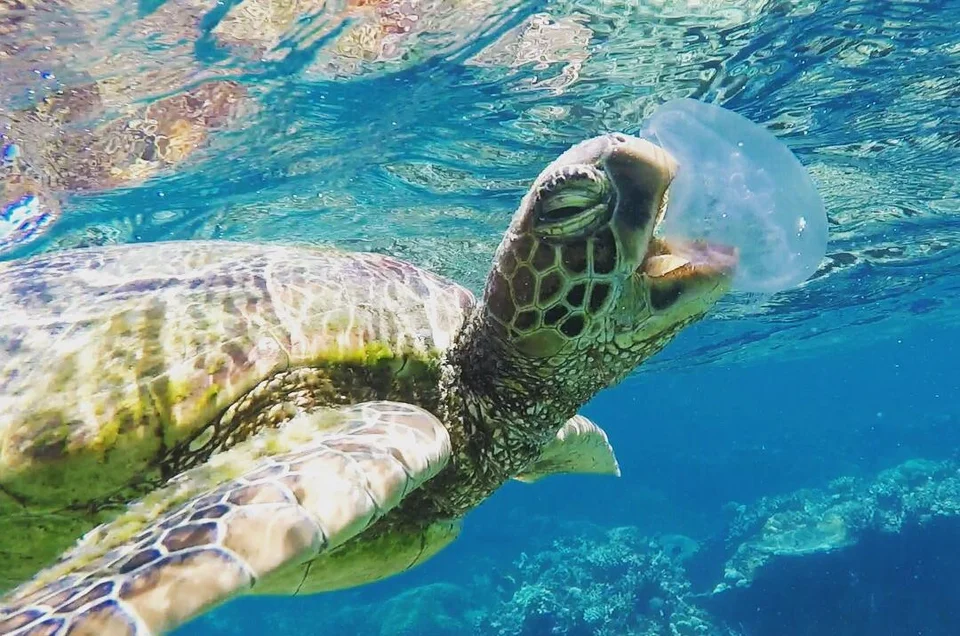
The Diet of the Leatherback Sea Turtle: A Jellyfish Feeder

nordic-circus.org – The leatherback sea turtle (Dermochelys coriacea) is the largest and one of the most unique sea turtles in the world, recognized by its soft, leathery shell rather than a hard carapace. These turtles can grow up to 2.1 meters (7 feet) in length and weigh over 900 kilograms (2,000 pounds). One of the most fascinating aspects of the leatherback sea turtle is its highly specialized diet, which is primarily composed of jellyfish. In this article, we explore the feeding habits of the leatherback sea turtle, its dietary adaptations, and its role in the marine ecosystem.

A Diet Dominated by Jellyfish

Leatherback sea turtles are known as gelatinivores, meaning their diet consists almost entirely of gelatinous prey, primarily jellyfish. This preference for jellyfish is unusual among sea turtles, as most other species are omnivores or herbivores. Leatherbacks have developed specific adaptations that allow them to thrive on this low-calorie diet.

1. Jellyfish: The Primary Food Source

  • The vast majority of the leatherback sea turtle’s diet is composed of jellyfish. They feed on a variety of species, including moon jellies (Aurelia aurita), lion’s mane jellyfish (Cyanea capillata), and sea nettles (Chrysaora). Jellyfish are found in oceans worldwide, making them an abundant food source for leatherbacks.
  • Leatherbacks use their strong, scissor-like jaws to capture and consume jellyfish. They can eat hundreds of jellyfish per day, helping to keep jellyfish populations in check.

2. Comb Jellies and Other Gelatinous Zooplankton

  • In addition to jellyfish, leatherback sea turtles also consume comb jellies (ctenophores) and other gelatinous zooplankton, which are similar in consistency to jellyfish. These soft-bodied organisms are abundant in the open ocean and provide additional sustenance for the turtles.

Feeding Adaptations for a Gelatinous Diet

Leatherback sea turtles have developed several unique adaptations that enable them to feed efficiently on jellyfish and other gelatinous prey, despite their low nutritional content.

1. Sharp Papillae

  • Inside the leatherback’s mouth and throat are backward-pointing spiny papillae that help trap and hold slippery jellyfish as the turtle swallows them. These papillae prevent the jellyfish from escaping and ensure they are directed toward the stomach.

2. Flexible Beak

  • The leatherback’s beak is softer and more flexible than that of other sea turtles, making it ideal for gripping and tearing apart jellyfish. This specialized beak allows the turtle to bite through the jellyfish’s body without being stung by its tentacles.

3. Large Esophagus and Stomach

  • Leatherbacks have a large esophagus and stomach, which allow them to consume jellyfish in large quantities. Their digestive system is designed to handle the high water content of jellyfish, efficiently extracting the small amount of nutrients and energy these creatures provide.

Feeding Range and Behavior

Leatherback sea turtles are highly migratory, traveling thousands of kilometers across the world’s oceans in search of jellyfish-rich feeding grounds. They feed both in the open ocean and along coastal areas, often diving to great depths—up to 1,200 meters (4,000 feet)—to reach jellyfish that live in deeper waters.

1. High-Volume Feeding

  • Due to the low caloric value of jellyfish, leatherbacks must consume a large number of them to meet their energy needs. They are known to feed continuously, particularly in areas where jellyfish are abundant, and can consume hundreds of pounds of jellyfish in a single day.

2. Migration and Seasonal Feeding Patterns

  • Leatherback sea turtles migrate long distances between their nesting beaches and feeding grounds, often following jellyfish blooms. During these migrations, they will stop to feed wherever jellyfish populations are dense, using their exceptional swimming and diving abilities to locate prey.

Supplemental Food Sources

Although jellyfish make up the vast majority of the leatherback sea turtle’s diet, they are known to consume other types of prey when available, particularly when jellyfish are scarce.

1. Small Fish

  • On occasion, leatherbacks may consume small fish or fish eggs that they encounter while foraging for jellyfish. However, this is a minor part of their diet, as they primarily rely on gelatinous organisms.

2. Crustaceans

  • Leatherbacks might also feed on small crustaceans, such as planktonic shrimp or other soft-bodied invertebrates, but this is rare compared to their preference for jellyfish.

Ecological Importance and Conservation Implications

Leatherback sea turtles play an essential role in marine ecosystems by helping to control jellyfish populations. Without predators like leatherbacks, jellyfish populations could grow unchecked, leading to imbalances in the ecosystem that could negatively impact fish populations and other marine life.

Unfortunately, leatherback sea turtles face significant threats, including bycatch in fishing nets, plastic pollution, and habitat loss. One of the most pressing issues is the ingestion of plastic bags, which resemble jellyfish and can be deadly to leatherbacks when consumed.

1. Plastic Pollution

  • Leatherback sea turtles often mistake plastic debris, such as plastic bags, for jellyfish. Ingesting plastic can block their digestive system, leading to malnutrition or death. Reducing plastic pollution in the oceans is crucial for the survival of these majestic creatures.

2. Bycatch

  • Leatherbacks are also at risk of becoming entangled in fishing gear, particularly longlines and gillnets, as they dive to feed on jellyfish. Conservation efforts to reduce bycatch, such as using turtle excluder devices (TEDs) and implementing protected areas, are vital to preserving leatherback populations.

Conclusion

The leatherback sea turtle’s diet is highly specialized, consisting almost entirely of jellyfish and other gelatinous organisms. With their unique feeding adaptations, leatherbacks play a vital role in controlling jellyfish populations and maintaining balance in marine ecosystems. However, their reliance on jellyfish also makes them vulnerable to threats such as plastic pollution and habitat destruction. Protecting leatherback sea turtles and their habitats is essential to ensuring the survival of this ancient and extraordinary species.

Ocean Secrets: Mysteries Beneath the Waves

nordic-circus.org – The ocean, with its vast expanse and mysterious depths, has long captivated the human imagination. Beneath the surface of the water lies a world teeming with life, secrets, and wonders yet to be discovered. This article delves into the mysteries beneath the waves, exploring the hidden life of the ocean and the secrets it holds.

The Deep Sea: A World Apart

The deep sea, often referred to as the abyss, is a realm of darkness and extreme conditions. It is a world apart from the sunlit surface, where unique species have evolved to survive in the cold, high-pressure environment. Despite its inhospitable conditions, the deep sea is home to a diverse array of life forms, many of which are still unknown to science.

Bioluminescence: Nature’s Underwater Light Show

One of the most fascinating phenomena in the deep sea is bioluminescence. This natural form of light is produced by a variety of marine organisms, from tiny plankton to large squid. Bioluminescence serves various purposes, including communication, mating, and camouflage. It creates an otherworldly glow in the dark depths, illuminating the ocean in a dazzling display of colors.

Hydrothermal Vents: Oases of Life

Hydrothermal vents are another marvel of the deep sea. These underwater hot springs are found at tectonic plate boundaries, where superheated water spews from the ocean floor. Despite the toxic chemicals and scalding temperatures, hydrothermal vents support thriving ecosystems. Unique species of bacteria, tubeworms, and crabs have adapted to these extreme conditions, creating oases of life in the otherwise barren abyss.

The Lost City: A Hydrothermal Vent Field

The Lost City Hydrothermal Field, discovered in 2000, is a remarkable example of deep-sea hydrothermal activity. Located near the mid-Atlantic Ridge, this field is characterized by towering white chimneys that emit alkaline fluids rich in methane and hydrogen. The Lost City challenges our understanding of life in the deep sea, suggesting that life could potentially thrive in similar environments on other planets.

Deep-Sea Exploration: Unveiling Ocean Secrets

Exploring the deep sea is a challenging endeavor, requiring specialized equipment and technology. Submersibles, remotely operated vehicles (ROVs), and autonomous underwater vehicles (AUVs) are essential tools for venturing into the abyss. These technologies enable scientists to capture stunning images and collect valuable data, helping to uncover the mysteries of the deep sea.

Conservation Efforts: Protecting the Deep Sea

The deep sea is not only a source of fascination but also a critical part of the Earth’s ecosystem. It plays a vital role in regulating the climate and supporting biodiversity. However, the deep sea faces threats from pollution, overfishing, and habitat destruction. Conservation efforts are essential to protect this fragile environment and preserve its secrets for future generations.

Conclusion

The ocean’s secrets are as vast and mysterious as the deep sea itself. From bioluminescent creatures to hydrothermal vents, the deep sea is a realm of wonders waiting to be discovered. As we continue to explore this hidden world, we gain a deeper appreciation for the ocean’s beauty and its importance to life on Earth. Protecting the deep sea is not only a matter of scientific curiosity but also a necessity for the health of our planet.

World War I: In The Air and The War at Sea

nordic-circus.org – World War I, often remembered for its trench warfare and massive land battles, also marked a significant period in the evolution of naval and aerial combat. The war at sea and in the air introduced new technologies, strategies, and dimensions to warfare, setting the stage for future conflicts.

The War at Sea

The naval aspect of World War I was characterized by the struggle for control of the seas, primarily between the British Royal Navy and the German Imperial Navy. This struggle was not just about dominance but also about securing the vital sea lanes for the transport of troops, supplies, and food.

The Blockade

One of the most significant naval strategies employed during the war was the blockade. The British Royal Navy, the largest and most powerful navy in the world at the time, blockaded Germany’s North Sea coast. This blockade aimed to prevent Germany from importing essential goods, including food and raw materials for munitions. The blockade was effective, leading to significant hardship within Germany and contributing to the country’s eventual defeat.

The U-Boat Campaign

In response to the blockade, Germany initiated its own strategy using U-boats, or submarines. The U-boat campaign targeted merchant ships, aiming to cut off supplies to Britain and force it out of the war. This campaign was initially successful, but it also led to several incidents that brought the United States into the war. The most notable was the sinking of the Lusitania in 1915, which resulted in the deaths of 128 Americans.

Naval Battles

The war at sea also saw significant battles, the most famous being the Battle of Jutland in 1916. This battle between the British Grand Fleet and the German High Seas Fleet was the largest naval engagement of the war. Despite the inconclusive outcome, it demonstrated the growing importance of naval technology, including battleships, dreadnoughts, and submarines.

The War in the Air

The air war of World War I was in its infancy, with aircraft being used primarily for reconnaissance, artillery spotting, and, later, for bombing. The development of fighter aircraft to shoot down reconnaissance planes led to the famous dogfights between aces like the Red Baron (Manfred von Richthofen) of Germany and Edward Mannock of Britain.

Aircraft Development

The war spurred rapid development in aircraft technology. Early planes were fragile, canvas-covered biplanes with limited range and speed. By the end of the war, aircraft were faster, more durable, and capable of carrying machine guns and bombs. The introduction of the tank and the use of chemical weapons also marked significant advancements in military technology.

Strategic Bombing

Although still in its early stages, the concept of strategic bombing began to emerge. Both sides used aircraft to bomb military targets and, occasionally, civilian areas. The bombing of cities like London and Paris was intended to demoralize the enemy and disrupt war production.

Conclusion

World War I’s naval and aerial theaters introduced new dimensions to warfare, showcasing the importance of technology, strategy, and control of the seas and skies. The lessons learned during this period would significantly influence military tactics and technology in future conflicts, including World War II. The war at sea and in the air during World War I not only changed the course of the conflict but also shaped the future of military engagements worldwide.